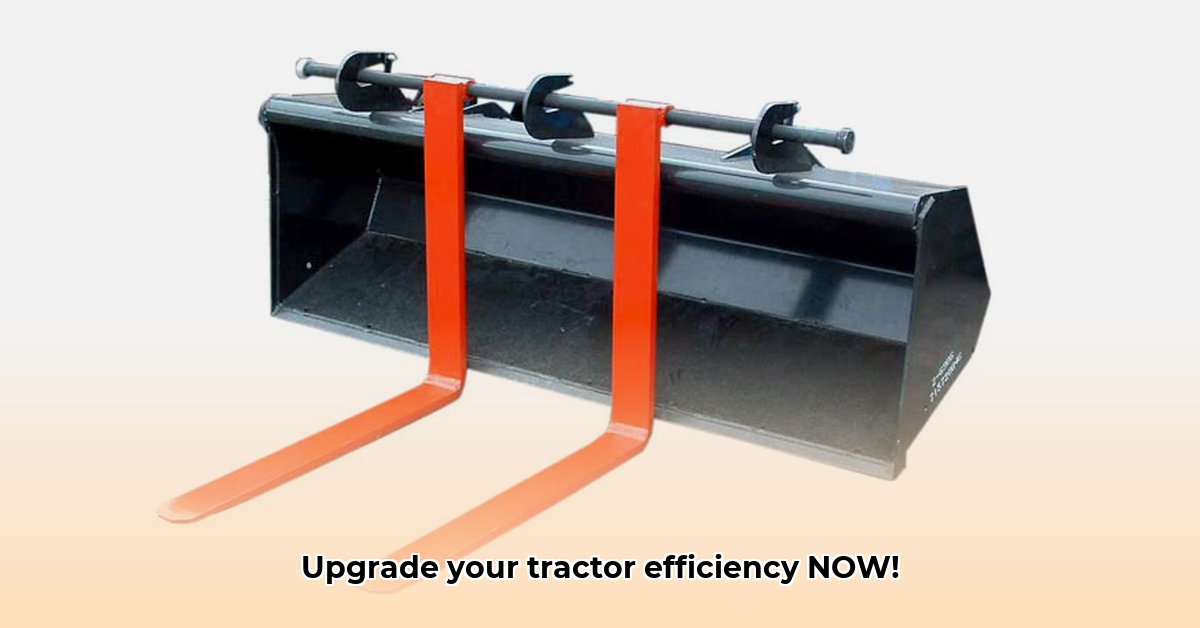
Choosing the right quick-attach tractor forks can significantly boost your farm's productivity. This guide provides a step-by-step approach to selecting the perfect set, considering critical factors like material strength, compatibility, and safe load capacity. We'll equip you with the knowledge to make an informed decision, maximizing your investment and ensuring years of safe, efficient operation. For more information on 3-point tractor forks, check out this helpful resource: 3-point tractor forks.
Understanding Quick Attach Systems: Streamlining Your Workflow
"Quick attach" systems allow for rapid exchange of tractor attachments, saving valuable time and increasing versatility. This means swiftly switching between forks, buckets, mowers, and other implements without cumbersome adjustments. This translates to significant time savings crucial for farm operations.
Material Matters: Choosing the Right Steel
The strength and durability of your forks hinge on the material. Hardox 450 steel, while more expensive, offers superior strength and longevity, ideal for frequent heavy-duty use. Lighter-duty applications might justify less costly alternatives. Consider the typical weight of your loads and frequency of use when making this decision.
Load Capacity: Safety First, Always
Never exceed a fork's rated load capacity (the maximum weight it can safely handle). Overloading can lead to catastrophic equipment failure and potential injury. Always incorporate a safety margin; it's better to have extra capacity than to risk a dangerous situation. Consider the combined weight of the load and the pallet itself.
Matching Your Tractor: Ensuring Seamless Compatibility
Before purchasing, verify the forks' compatibility with your tractor's quick-attach system. Discrepancies can render forks unusable and, potentially, unsafe. Consult your tractor's manual and the manufacturer's specifications to confirm a perfect fit.
Choosing Your Forks: A Practical, Step-by-Step Guide
Selecting the appropriate forks involves a careful assessment of several factors:
Assess Your Needs: Define the typical weight and type of loads (hay, lumber, etc.) you'll be handling. Heavier loads demand stronger forks.
Check Your Tractor's Lifting Capacity: Factor in the tractor's maximum lift capacity (including the load's center of gravity) and lift height. Don't exceed these limits ever!
Research Manufacturers and Reviews: Examine various manufacturers, comparing specifications and reviewing online feedback, paying attention to both positive and negative comments.
Compare Detailed Specifications: Carefully review load capacity, steel type, tine length, and tractor compatibility. Obtain verifiable data from manufacturers, not just marketing claims.
Obtain Multiple Quotes: Compare pricing and features from different suppliers before committing to a purchase.
Inspect the Forks Before Purchase: If possible, inspect the forks in person to verify weld quality and overall construction.
Comparative Analysis: Key Features at a Glance
| Feature | Pros | Cons |
|---|---|---|
| Quick Attach System | Rapid attachment changes, increased versatility | Higher initial cost, potential compatibility issues |
| Hardox 450 Steel | Superior strength and durability, ideal for heavy-duty use | Higher cost |
| Adequate Load Capacity | Safe handling of heavier loads | Risk of damage or injury if overloaded; demands careful weight management |
| System Compatibility | Ensures proper function and optimal safety with your tractor model | Requires careful verification |
Final Considerations: A Sound Investment
Investing in high-quality quick-attach forks is an investment in your farm's efficiency and safety. By following this guide and carefully considering all factors, you will ensure a seamless and safe operation for years to come. Remember, prioritizing safety is paramount when working with heavy equipment.
Stop Lifting, Start Forking: The Magic of Quick Attach
For small farm owners, landscapers, and serious homesteaders, the tractor loader is the undisputed workhorse. However, relying solely on a bucket for moving heavy, stacked, or awkwardly shaped materials is inefficient and often unsafe. This is where the Quick Attach Tractor Fork steps in, transforming your utility vehicle from a dirt mover into a true material handling machine. The magic of the quick attach system is its name: it allows operators to switch implements—from a bucket to forks, or even a bale spear—in mere seconds, often without leaving the seat. This standardized connection platform, commonly Skid Steer or Euro style, eliminates frustrating pin changes and precarious chain setups, maximizing uptime and significantly reducing the physical strain associated with managing bulky loads like lumber, hay bales, or pallets of feed.
The versatility provided by dedicated quick attach forks extends far beyond simply lifting pallets. They are indispensable for managing construction debris, clearing large piles of brush and logs into tidy stacks, and precisely placing heavy stones or equipment around the property. By providing stable, adjustable lifting points, these forks allow for far better visibility and control compared to trying to balance items on the edge of a curved bucket, drastically improving job site safety. If your property involves regular movement of bagged goods, fertilizer, building materials, or winter firewood stores, the investment in a quality set of quick attach forks is one of the highest returns you can make on your tractor accessory budget, turning hours of back-breaking labor into minutes of effortless precision.